Primary & Revision Total Hip Replacement
Total Hip Replacement (THR) is a surgical procedure performed to relieve severe hip pain and restore normal movement of the hip joint. It is commonly recommended for patients suffering from advanced arthritis, hip joint damage, or chronic hip pain that does not respond to medications, physiotherapy, or other conservative treatments.
During the procedure, the damaged parts of the hip joint are replaced with artificial implants designed to replicate the natural movement of the joint. Modern hip replacement techniques help patients experience significant pain relief, improved mobility, and a better quality of life.
Primary Total Hip Replacement
Primary Total Hip Replacement refers to the first hip replacement surgery performed when the hip joint becomes severely damaged due to conditions such as osteoarthritis, rheumatoid arthritis, avascular necrosis, or trauma.
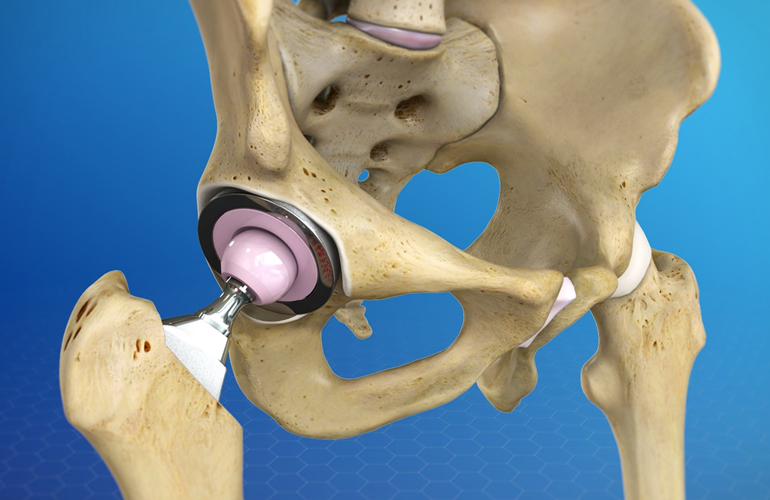
In this procedure, the damaged ball-and-socket joint of the hip is replaced with prosthetic components made of durable materials such as metal, ceramic, and medical-grade plastic. These components help restore smooth movement and stability of the hip joint.
Primary hip replacement surgery can significantly improve a patient’s ability to walk, perform daily activities, and live a more active and pain-free life.
Revision Total Hip Replacement
Revision Total Hip Replacement is performed when a previously implanted hip replacement needs to be corrected or replaced. Over time, implants may wear out, loosen, or cause complications that require revision surgery.
Revision surgery involves removing the existing implant and replacing it with a new prosthetic joint designed to restore proper hip function and stability. This procedure is more complex than primary hip replacement and requires specialized expertise and careful surgical planning.
With modern techniques and advanced implants, revision hip replacement can effectively restore joint function and relieve pain.
Conditions That May Require Hip Replacement
Hip replacement surgery may be recommended for patients experiencing:
-
Severe hip pain affecting daily activities
-
Advanced osteoarthritis or rheumatoid arthritis
-
Hip stiffness and limited range of motion
-
Hip fractures or traumatic injury
-
Avascular necrosis (loss of blood supply to the hip bone)
-
Failure or loosening of a previous hip replacement
Benefits of Hip Replacement Surgery
-
Relief from chronic hip pain
-
Improved hip joint movement and flexibility
-
Better ability to walk, sit, and perform daily activities
-
Increased joint stability
-
Improved overall quality of life
Recovery and Rehabilitation
Recovery after hip replacement surgery includes physiotherapy and guided exercises to strengthen the muscles around the hip joint. Patients are encouraged to begin gentle movement soon after surgery to promote faster healing and improve joint function.
Most patients can resume normal daily activities within a few weeks, while full recovery may take a few months depending on the individual’s health and rehabilitation progress. Regular follow-up appointments ensure proper healing and long-term success of the implant.