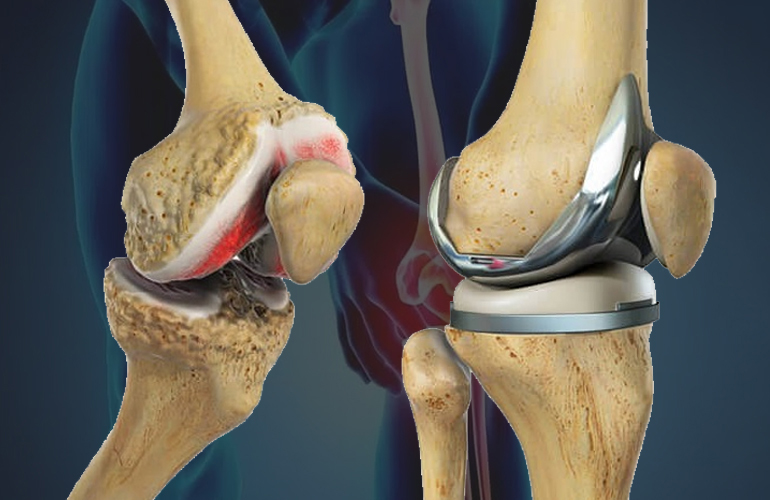
Primary & Revision Total Knee Replacement
Total Knee Replacement (TKR) is a highly effective surgical procedure designed to relieve severe knee pain and restore normal joint function. It is commonly recommended for patients suffering from advanced arthritis, severe knee damage, or long-standing knee pain that does not improve with medications, physiotherapy, or lifestyle modifications.
During the procedure, the damaged portions of the knee joint are replaced with specially designed artificial implants that help the joint move smoothly and comfortably. With modern surgical techniques and high-quality implants, knee replacement surgery offers long-lasting pain relief and improved mobility.
Primary Total Knee Replacement
Primary Total Knee Replacement is the first knee replacement surgery performed when the knee joint is severely damaged due to conditions such as osteoarthritis, rheumatoid arthritis, or traumatic injury.
In this procedure, the worn-out cartilage and damaged bone surfaces are carefully removed and replaced with artificial components made of metal and medical-grade plastic. These implants replicate the natural movement of the knee joint and allow patients to walk, bend, and perform daily activities with significantly less pain.
Primary knee replacement surgery can greatly improve quality of life by restoring independence, reducing chronic pain, and improving joint stability.
Revision Total Knee Replacement
Revision Total Knee Replacement is performed when a previous knee replacement implant needs to be repaired, replaced, or adjusted. This may be required if the original implant wears out, becomes loose, gets infected, or if the knee joint becomes unstable over time.
Revision surgery is more complex than primary knee replacement and requires specialized surgical expertise. The surgeon removes the old implant and replaces it with a new, more stable prosthetic component designed to restore knee function and stability.
With advanced surgical planning and modern techniques, revision knee replacement can help patients regain mobility and reduce pain effectively.
Conditions That May Require Knee Replacement
Total knee replacement may be recommended for patients experiencing:
-
Severe knee pain that limits daily activities
-
Advanced osteoarthritis or rheumatoid arthritis
-
Knee stiffness and reduced range of motion
-
Persistent swelling and inflammation
-
Deformity or instability of the knee joint
-
Failure of previous knee replacement implants
Benefits of Knee Replacement Surgery
-
Significant reduction in knee pain
-
Improved joint movement and flexibility
-
Better ability to walk and perform daily activities
-
Enhanced stability of the knee joint
-
Improved quality of life and independence
Recovery and Rehabilitation
Recovery after knee replacement surgery involves a structured rehabilitation program. Patients are encouraged to start gentle movement and physiotherapy soon after surgery to regain strength and flexibility in the knee joint.
Most patients are able to resume normal daily activities within a few weeks, while full recovery and maximum joint function may take a few months. Regular follow-up visits help ensure proper healing and long-term success of the implant.
Please click here for more Information
Best Orthopaedic Surgeon in ChemburDoctor for Knee Replacement Treatment in Chembur
Best Joint Replacement Specialist in Chembur
Orthopaedic Doctor for Fracture Treatment in Chembur
Doctor for Sports Injury Treatment Chembur
Best Knee Pain Treatment Specialist in Chembur